Quality in every winding. Reliability in every delivery.
ico
ico ico En ico
Color scheme:
A A A
Font size:
A A A A A
Copyright © 2025 AO "Чирчикский Трансформаторный Завод"
ico
Color scheme:
A A A
Font size:
A A A A A
sound Screen reader
The website features screen reader. To listen to the text, simply highlight it with the mouse and click on the appearing icon.
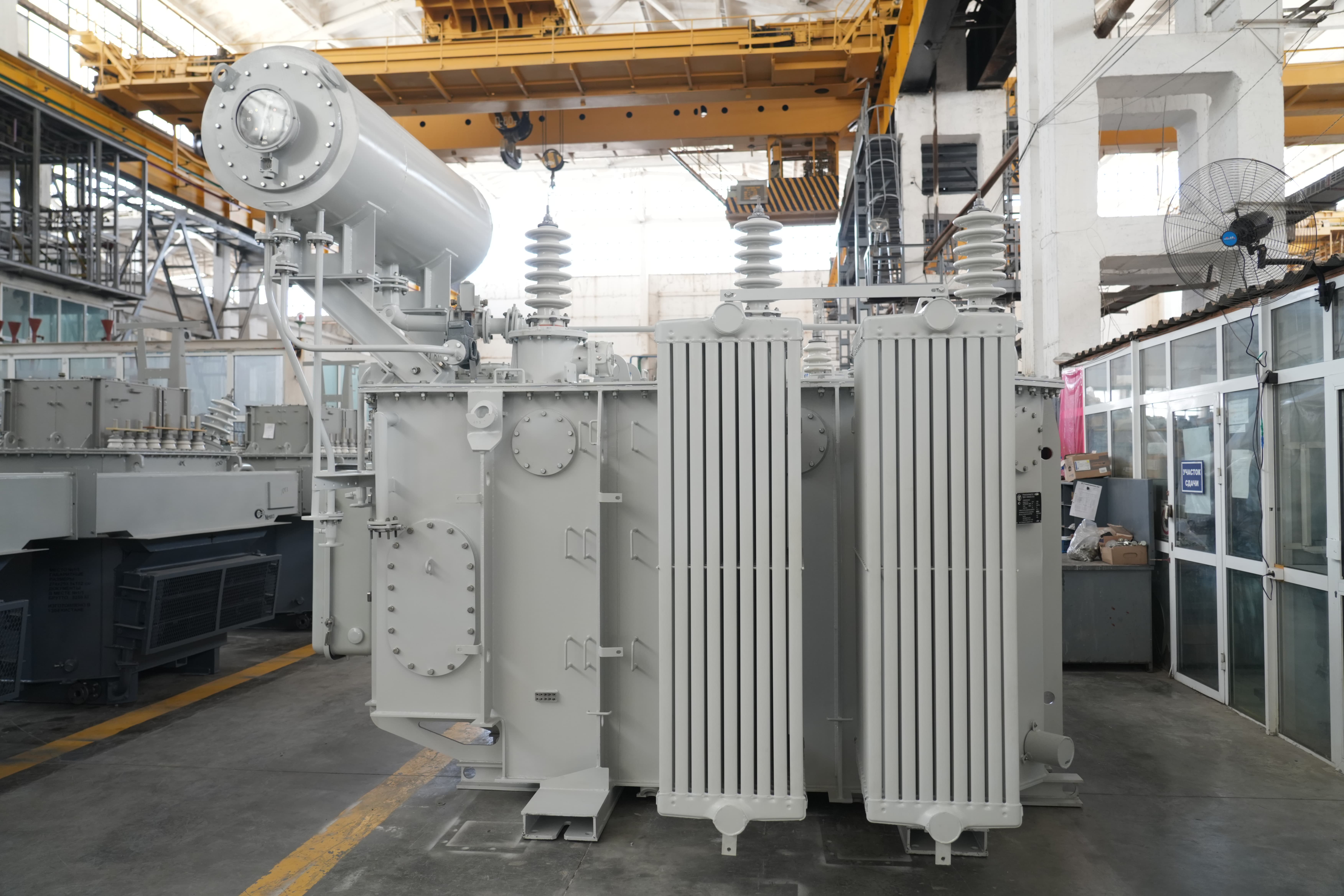
Radiators manufactured by JSC "ChTZ" are made from oval-shaped tubes.

Radiators with heat dissipation 30-35% higher than plate-type radiators.

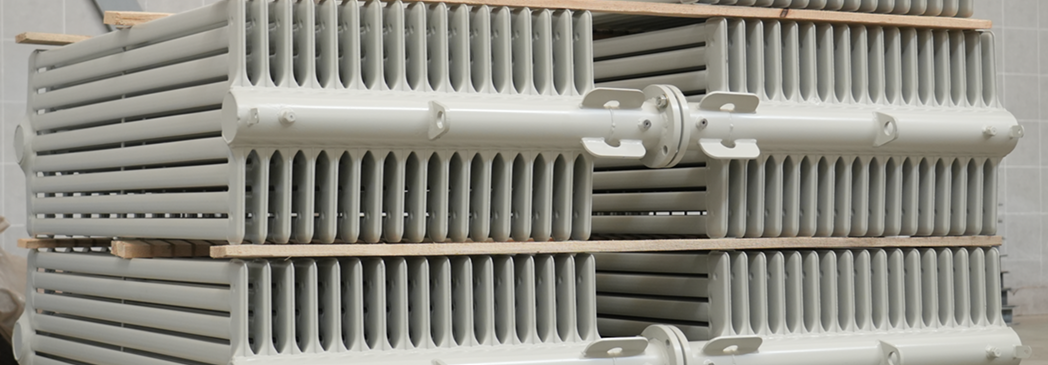
ChTZ manufactures high-quality radiators using the Italian Convett technology. The radiators are made from oval-section pipes. They dissipate heat more efficiently, ensuring reliable and safe operation of your equipment while reducing the size of the transformer.
ico

01 About Radiators

Each section of the radiator is made from high-quality steel tubes (ГОСТ 10704-91) , formed into an oval shape.

ChTZ radiators are made from oval-shaped tubes of high-quality steel. Each element consists of nine oval tubes with a thickness of 1 mm, automatically welded to two pressed steel covers, 1.5 mm thick. The radiator can consist of various numbers of elements (from 4 to 34) with heights ranging from 800 to 3500 mm.

Excellent oil circulation without any risk of laminar flow and high thermal efficiency, also due to the ratio of the surfaces in contact with the oil and air, allow ChTZ radiators to dissipate heat by approximately 30% or more compared to radiators made from stamped plates.

We manufacture two models of radiators:

radiator ico
Standard radiator model
radiator ico
Radiator model with reduced sections
The radiators are intended for transformers manufactured according to ГОСТ Р 52719- 2007, (ГОСТ 30830, МЭК 60076-1)

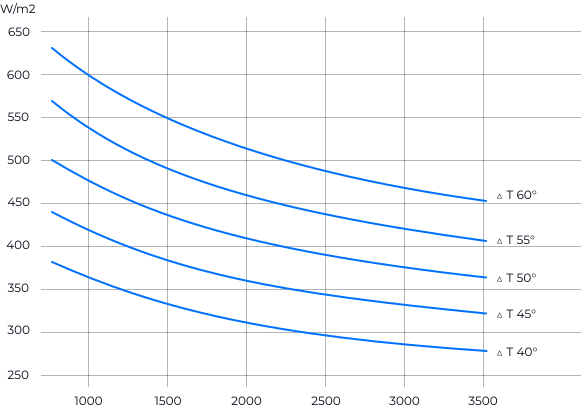
03 Efficiency Diagram

Efficiency Diagram of Radiator Heat Dissipation

Radiators from JSC "Chirchik Transformer Plant" with flat, straight tubes allow for 30-35% more efficient heat dissipation compared to radiators made from stamped plates.
dashboard

Dissipation (W/m2)

Radiator Height, мм

04 Comparative Table

Radiators with Flat, Straight Tubes by "ChTZ"
table
Distance Between Flanges, mm Weight, kg Area, m² Welds, mm
800 4,14 0,76 2164
1700 8,08 1,56
3000 13,78 2,72
3500 15,98 3,17
Radiators Made from Stamped Plates
table
Distance Between Flanges, mm Weight, kg Area, m² Welds, mm
800 7,2 0,92 2340
1700 15,83 2,02 4141
3000 28,3 3,61 6740
3500 33,1 4,23 7741

05 Our Advantages

Why Are Our Radiatorsa Step Ahead?

A smaller number of radiators used provides significant advantages compared to conventional radiators made from stamped plates.
  • Affordable Cost
  • Better Use of Available Space
  • Savings on Flanges and Fittings
  • Oil Savings
  • Savings on Installation and Transportation Costs
  • Fewer Fans in the Case of ONAF
  • Flexibility in Sizes

06 Gallery of Completed Projects

07 Manufacturing Processes

  • General Process
  • Internal Processing
  • Painting
  • Packaging
  • accessories

General Description of the Tubular Radiators Manufacturing Process

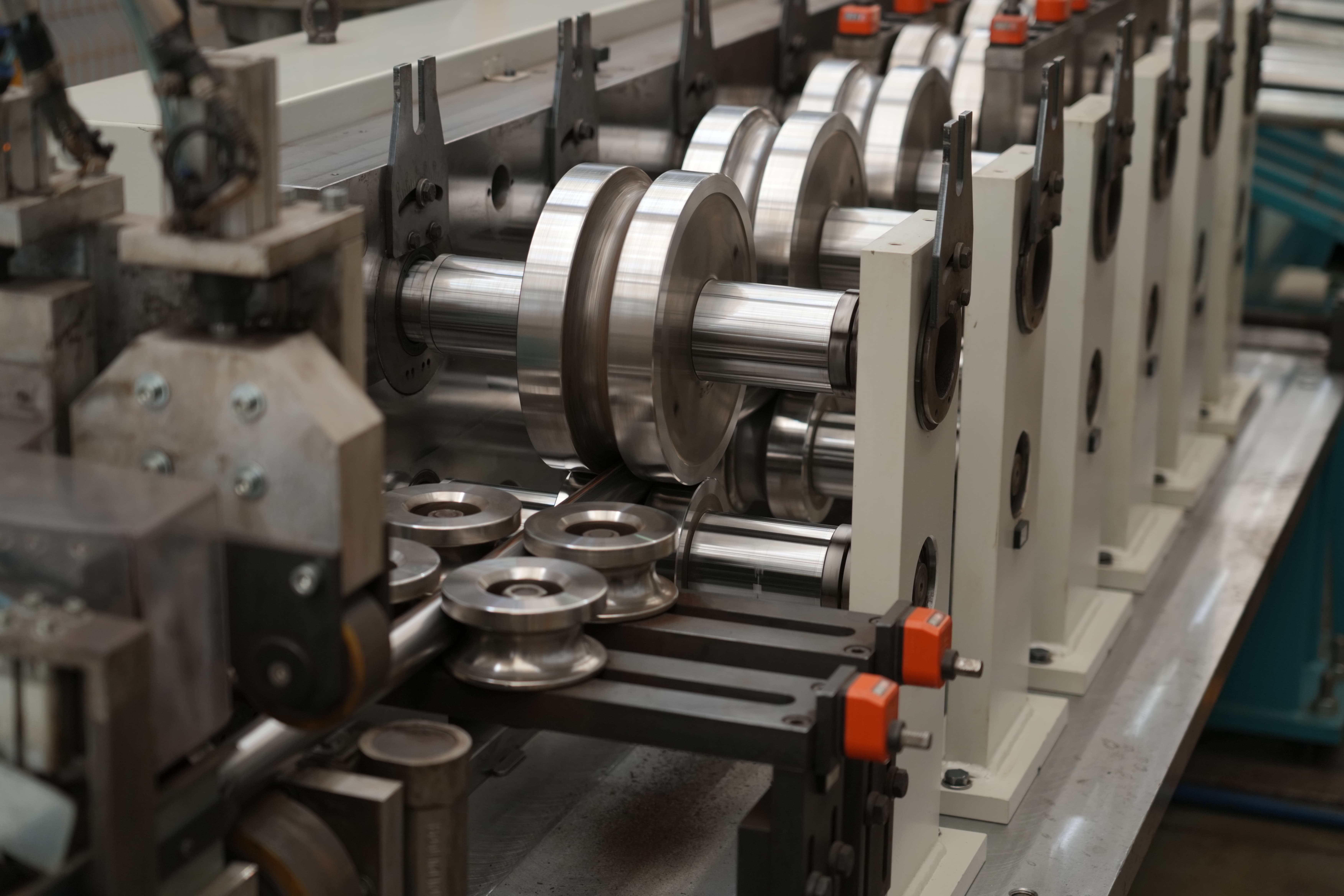
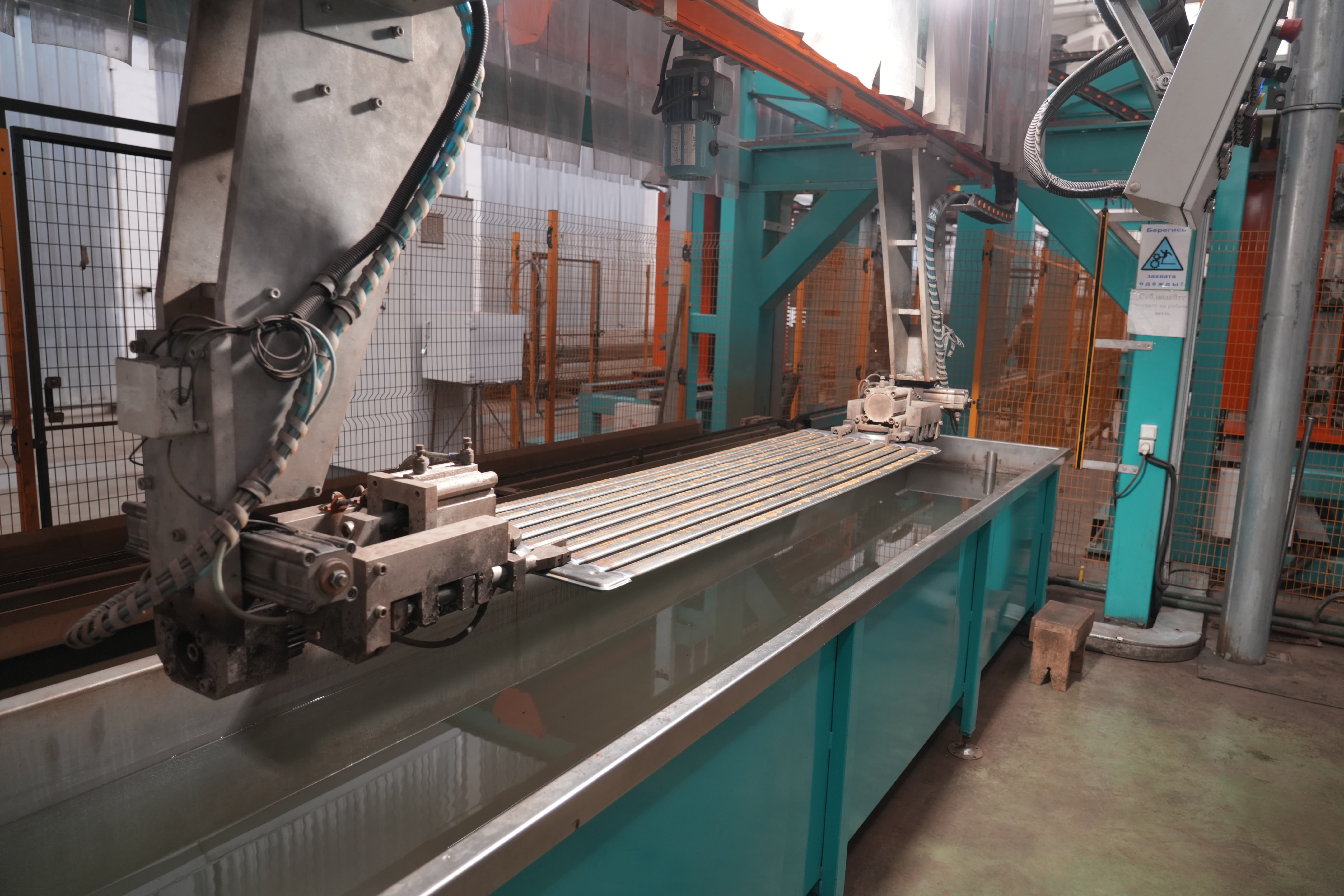
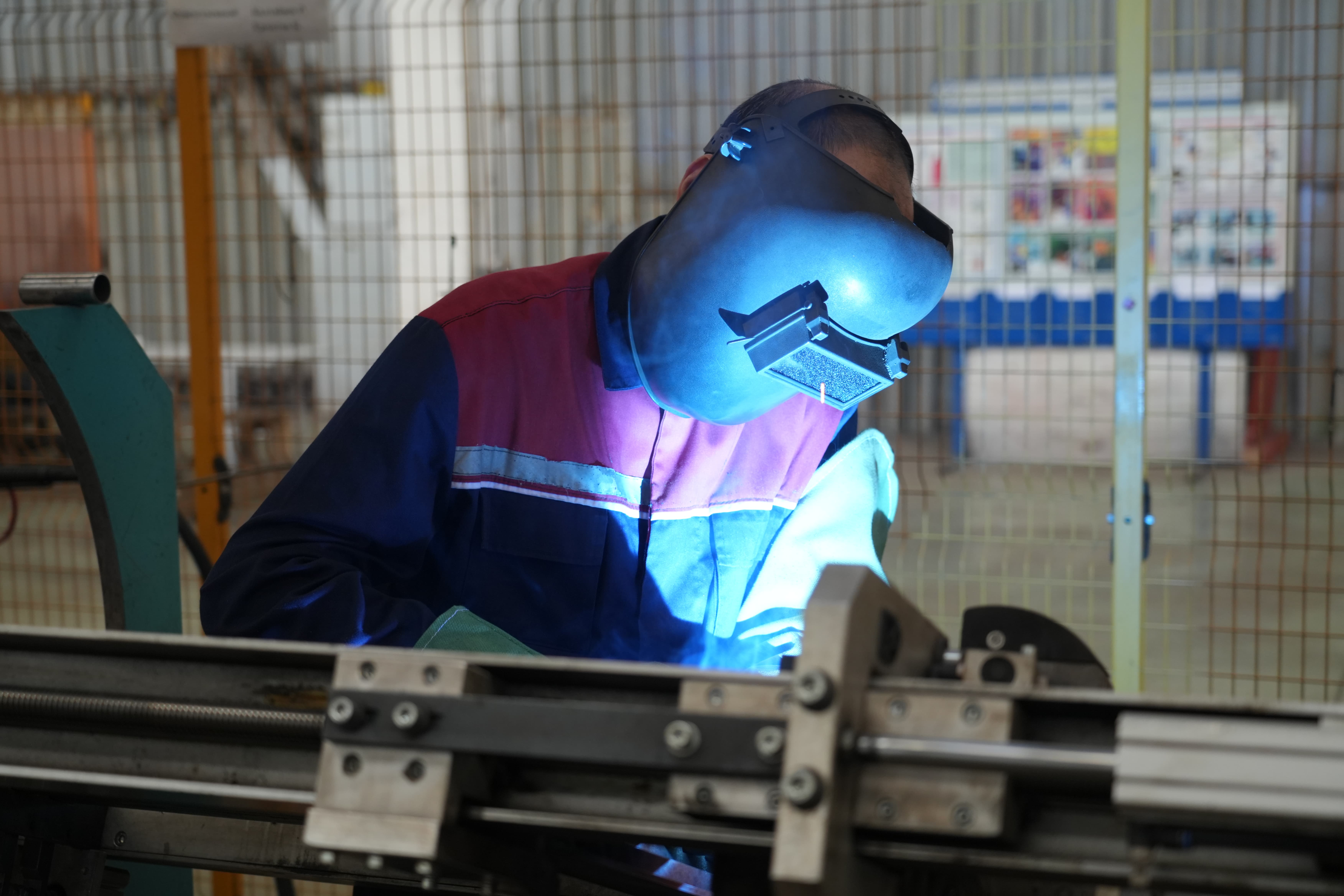
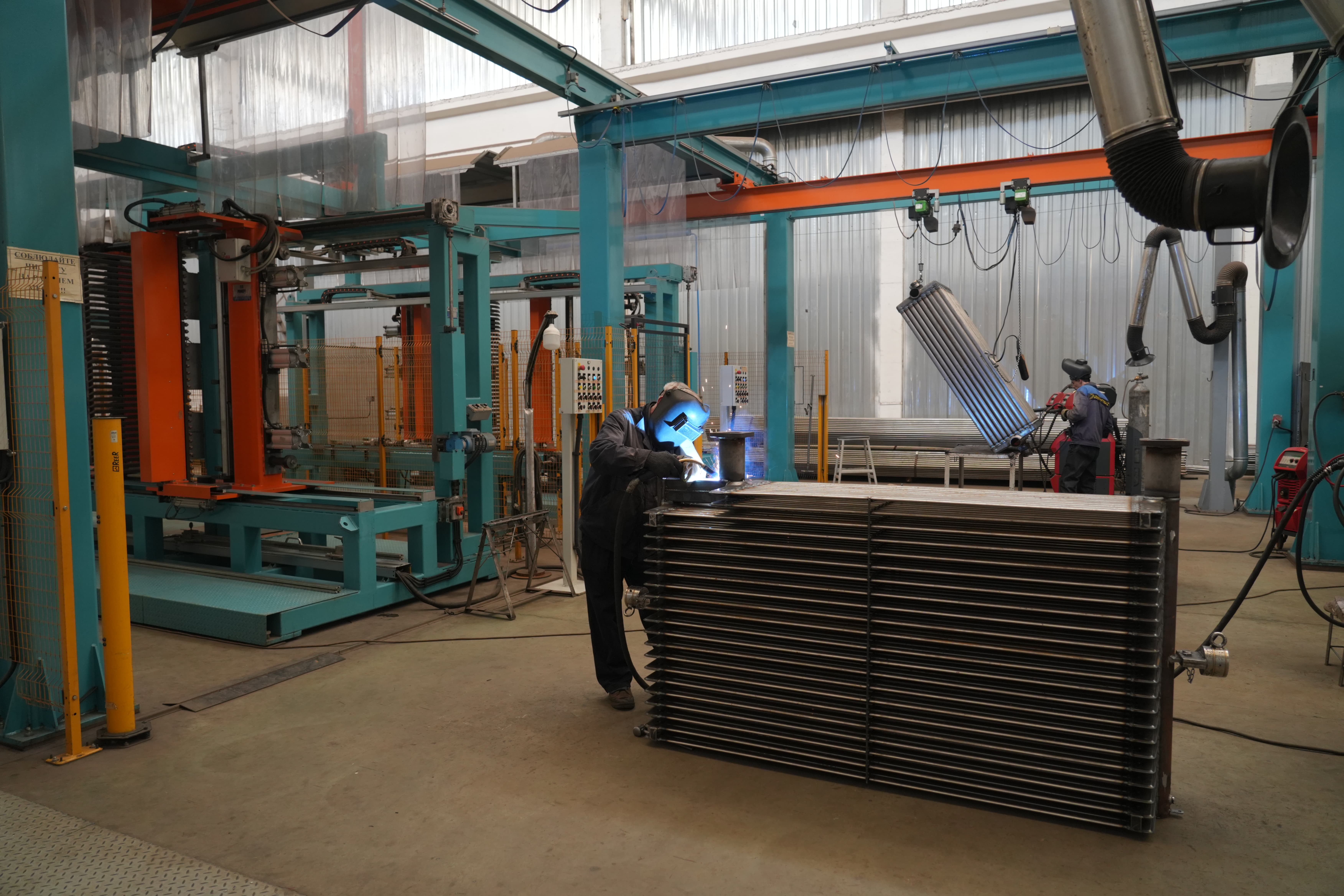
The radiators of JSC "ChTZ" are made from round steel tubes, which are reshaped into an ellipse on our automated production line and welded to the ends using steel caps in a row of 9 tubes. The total length is 510 mm. The elements undergo another stage of welding, where they are connected to each other by welding both the bottom and top of the manifold, allowing the oil to be evenly distributed inside the radiator. This unit consists of a minimum of 4 elements and a maximum of 32, forming the radiator body to which two flanged pipes are welded. It is also possible to add 2 or 3 down pipes depending on the transformer configuration. The flanges are standard, 150*150 mm, with 4 holes for connection to the transformer flanges. If you need custom flanges, JSC "ChTZ" will provide them.
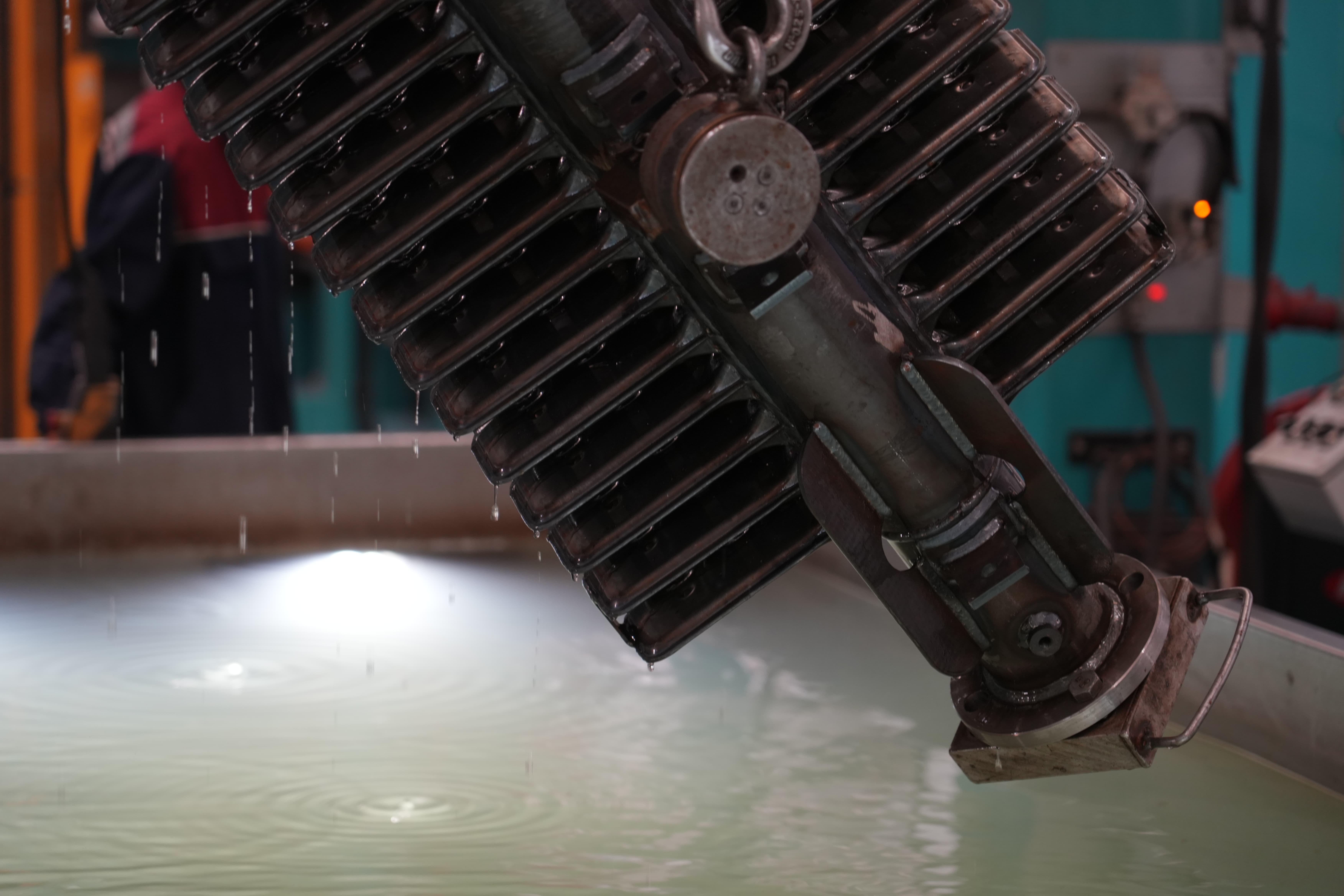
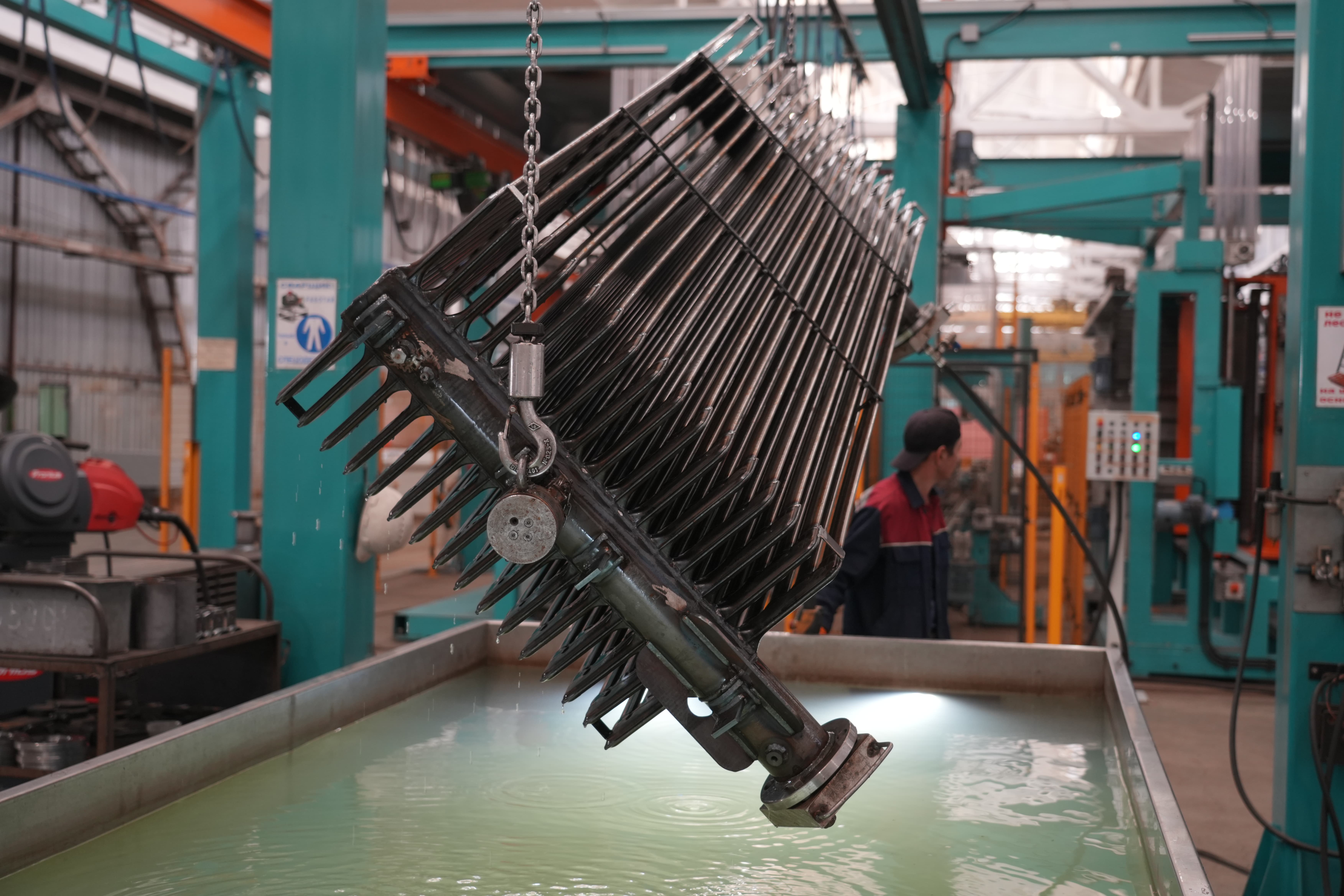
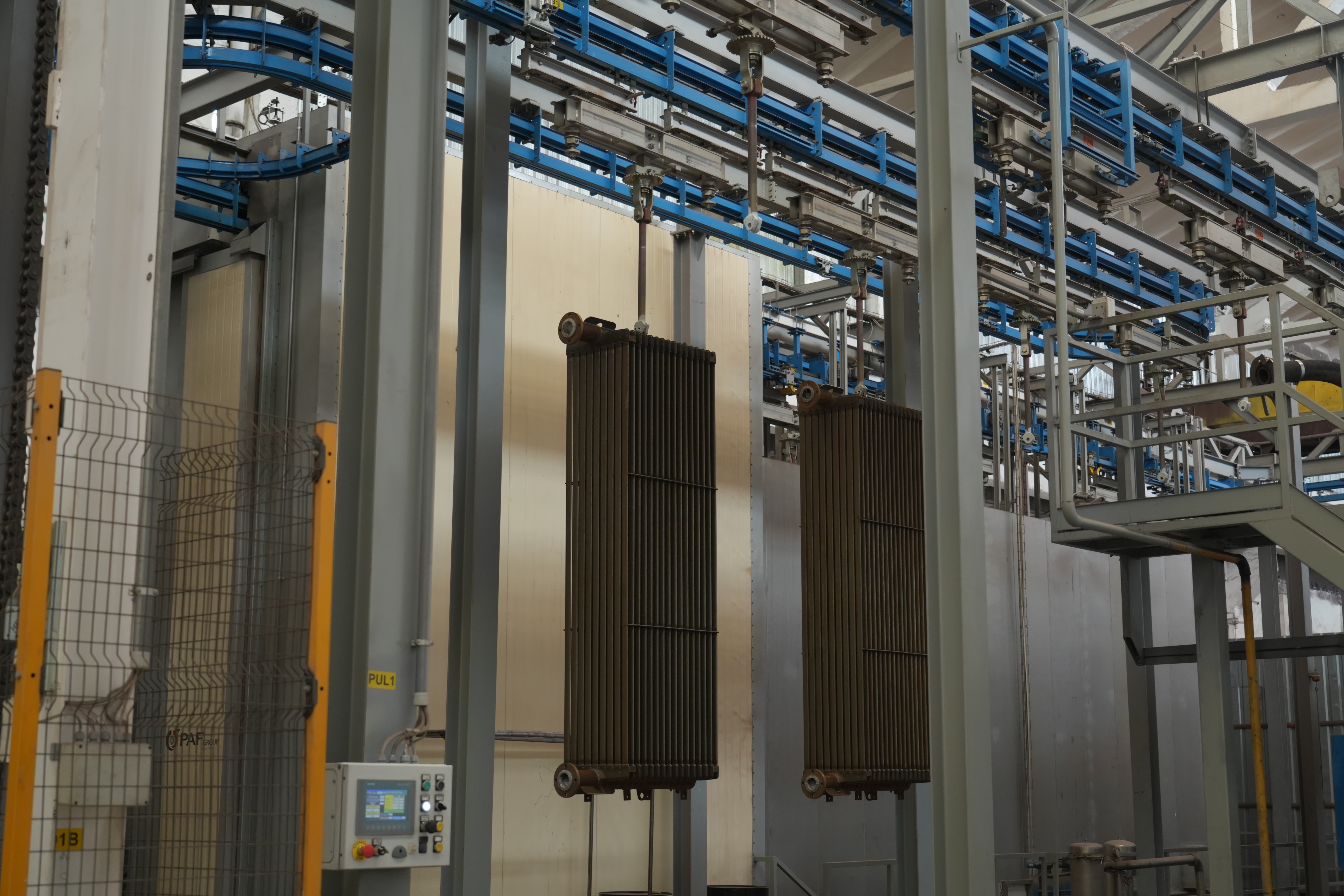
Additional accessories are then welded to the manifold: lifting rings, ventilation and drain valves, as well as mounting plates. Depending on the customer’s requirements, we can also install supports for fans, thermometer housings, or any other necessary accessories. After the entire radiator is assembled, a leak test is conducted at a compressed air pressure of 5.5 bar in a water pool to ensure no leaks. Finally, the radiator is sent to the painting workshop: it is cleaned from the inside with filtered transformer oil, sandblasted, degreased, and then painted using immersion or flow method as per customer requirements. The final finishing and packaging are the last operations performed on the radiator before it is shipped to customers.

Internal Radiator Treatment

In 2023, this process was modernized and improved with the installation of the 4.0 automatic forced washing system: a highly sophisticated system that ensures compliance with ISO 4406 oil cleanliness specifications, ensuring contamination levels meet ISO2 15 µm, ISO5 13 µm, and ISO15 8 µm standards.

The oil used in the process is filtered through a moisture removal system connected to the equipment for reuse in subsequent cycles, avoiding disposal.

This washing process removes metal residues left inside the radiator tubes.

JSC "Chirchik Transformer Plant" radiators with an oval tubular design have a significant advantage over plate radiators even in terms of internal cleaning. The oval tube is much smoother and therefore easier to clean than two welded steel sheets with numerous corners where contaminants can accumulate.

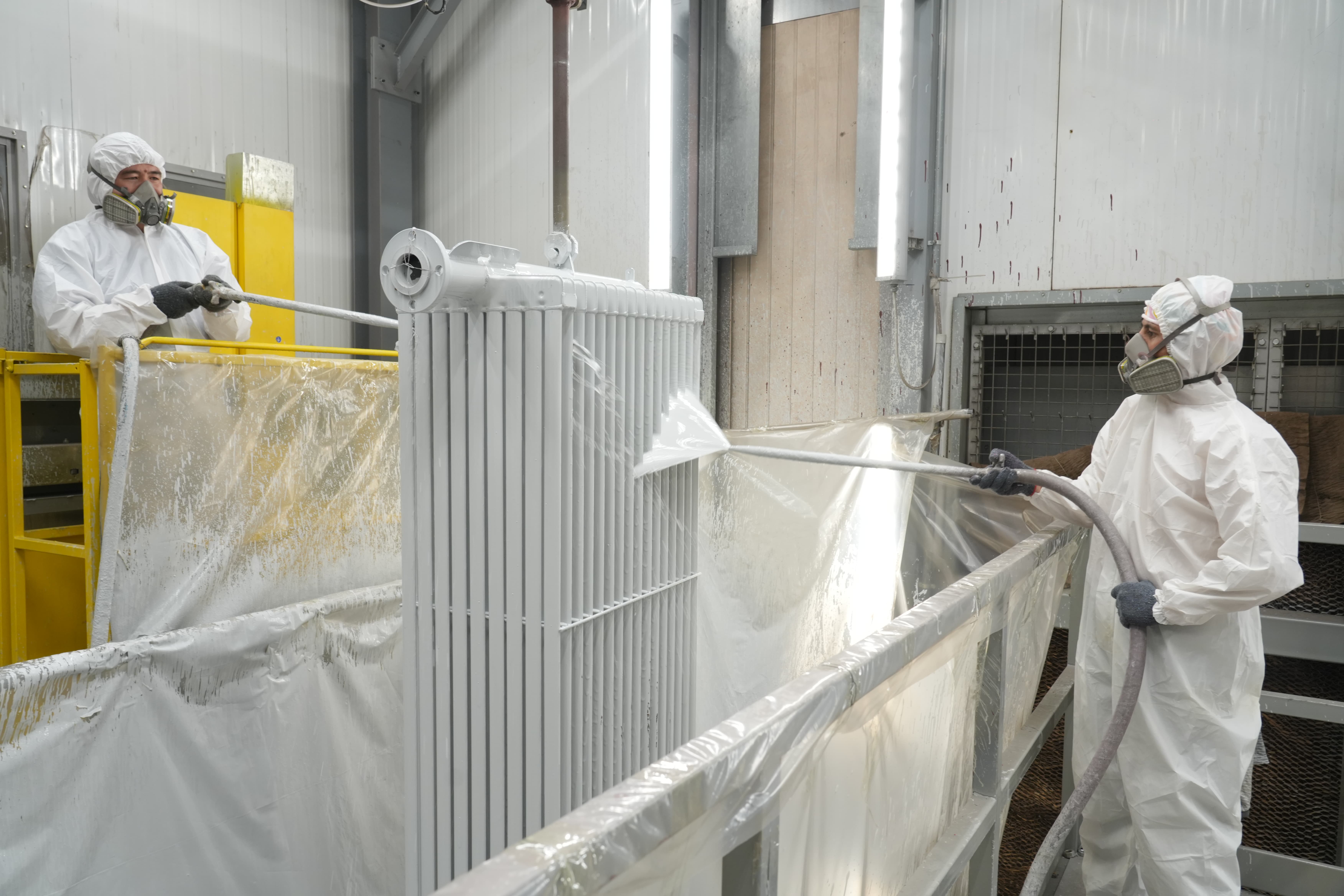
Radiator Painting Process

Before any type of painting, we treat 100% of the metal surface with sandblasting to white metal, in accordance with SSPC-SP5-63 specifications established by the Steel Structures Painting Council, with a maximum profile thickness of 20-30 µm. The appearance of the sandblasted surface must comply with class Sa3, according to the Swedish Standard SIS 055900-67. Within 24 hours, we apply a primer layer to the radiator to prevent oxidation. If specifically requested in the order, hot-dip galvanized radiators will be supplied in accordance with UNI-EN ISO 1461 standards. The mechanical construction of our radiators prevents deformation during hot-dip galvanizing. Depending on environmental conditions and required warranty, in cooperation with our paint supplier, we can recommend the appropriate product and application cycle.

The company paints surfaces according to EN ISO 12944-5 standards, adhering to the specified coating thickness based on the chosen operating cycle, which can be water-based or solvent-based. Depending on the acrylic, epoxy, or polyurethane materials used, each environmental class defines the minimum and nominal thickness required for the specific class. The company guarantees environmental classes from C3 to C5, M-H-VH, and CX for land applications. The operating cycles of JSC "ChTZ" are approved for environmental classes.

 NDFT = nominal dry film thickness

Radiator Packaging

process

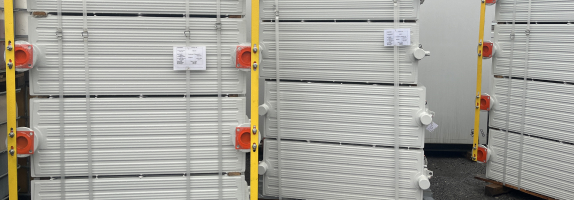
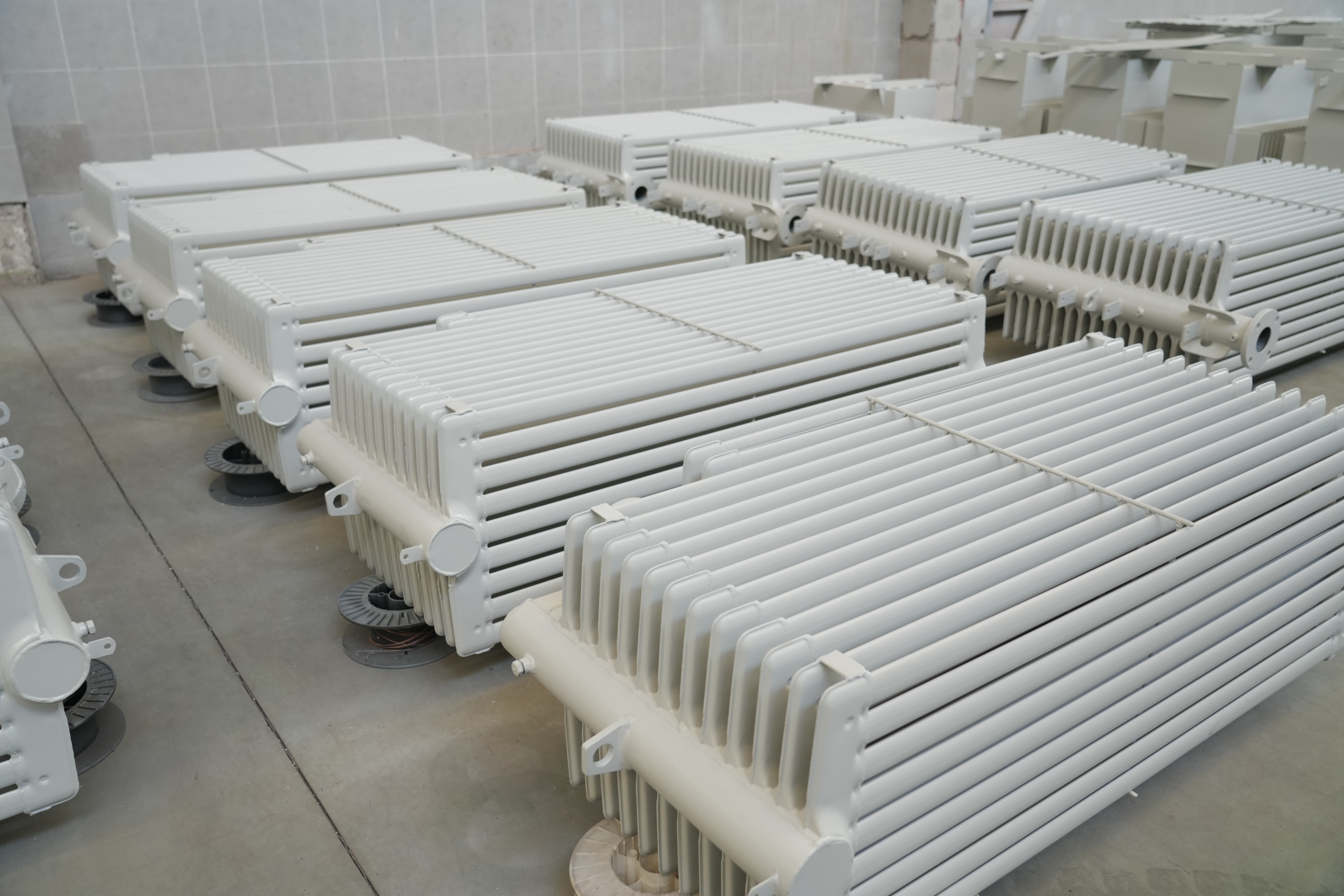
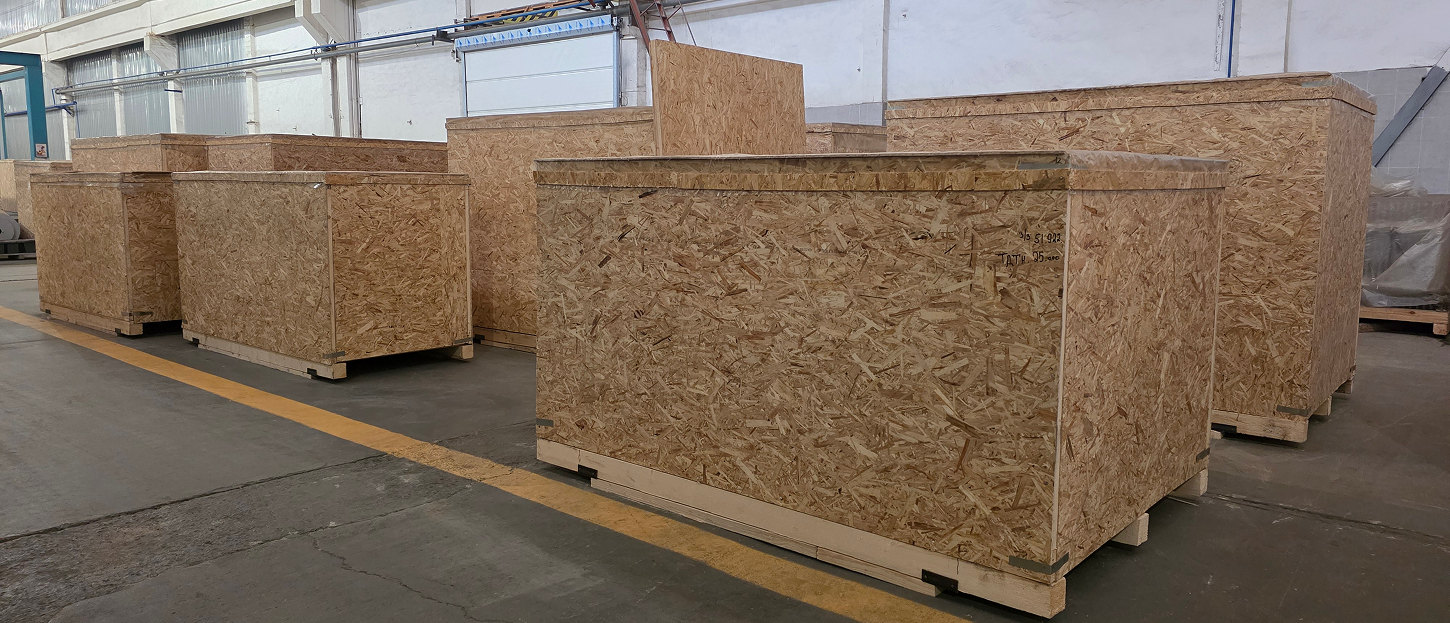
AO “CHTZ” has over 15 years of experience in packaging and delivering radiators worldwide, using custom-made pallets designed according to radiator dimensions and treated wood for countries that require it. Our radiator packaging method is the result of many years of continuous improvement.

Some notable examples include:

  • In-house pallets manufactured to custom specifications
  • Rubber pads to prevent damage between radiators
  • Rubber caps to prevent water ingress into the radiator
  • Galvanized mating flanges with gaskets
  • Special packaging
  • Very detailed and clear labeling

team
Tusov Artem Aleksandrovich
Deputy Director for Marketing and Sales

Can't decide?

Consultation and equipment selection over the phone

Your name

Phone

Please fill in all fields with *
Your application has been submitted for development
[10]
By clicking the “Request a call” button, you consent to the processing of personal data.